Skip to content

Cart

Your cart is empty

Article: Barenia Leather: The Hermès Heritage Leather

The JaneFinds Archive

Barenia Leather

The Hermès heritage leather — tanning, patina, Barenia Faubourg, and why it matters to collectors

Hermès is a house whose identity is inseparable from its equestrian origins. The saddlery that Thierry Hermès established in Paris in 1837 produced bridle leather that had to perform under the most demanding conditions — outdoor use, moisture, constant friction — and age beautifully in the process. That standard of leather, refined over nearly two centuries, is what Barenia represents. It is the leather Hermès holds in higher regard than any other in its catalog: a buttery calfskin with exceptional natural fragrance, used in equestrian accessories for decades before being introduced to handbag production in the 1970s.

Today Barenia remains in production, though output is extremely limited. The standards for hides are uncompromising — any imperfection in the skin disqualifies it from Barenia production — and the tanning process itself is one of the most time-intensive in the house's catalog. The result is a leather that cannot be produced at scale, which is why finding a Barenia bag at boutique has always been a rare experience.

Hermès Osier Picnic Basket Wicker and Barenia leather
Hermès Osier Picnic Basket — Wicker and Barenia leather. The Barenia trim illustrates how this leather has been used beyond bags, throughout the Hermès object catalog.
Hermès Kelly 35 Blue Denim and Barenia Gold Hardware
Kelly 35 — Blue Denim and Barenia, Gold Hardware. The Barenia in this bicolor configuration shows the leather at its most versatile — its natural Fauve tone anchoring the denim blue.

The tanning process

The process for creating Barenia leather is highly guarded. Only a small number of master tanners have developed the expertise required. The leather undergoes vegetable tanning — a slow, traditional process that results in the specific hand, fragrance, and aging behavior that defines Barenia. [Note for Jane: the original post described "double tanning in chrome and vegetable dyes" — please verify. Barenia is generally understood to be a pure vegetable-tanned leather; the chrome reference may be incorrect.]

Following tanning, the skins are soaked in a mixture of oils for several weeks before being dried, finished, and cut for production. The resulting leather has a characteristic suppleness and a rich, distinctive fragrance that is immediately recognizable. The brand stamp is embossed without foil — directly into the leather surface — and the bags are assembled by double saddle-stitching with beeswax-coated natural linen thread.

Patina — what Barenia actually does with age

The patina behavior of Barenia is the central reason collectors seek it. The leather is designed to evolve — every hour of carry, every contact, contributes to a deepening and enrichment of tone that no other standard Hermès leather replicates in the same way.

The intense oil treatment gives Barenia a near-miraculous scratch response. Most light scratches can be massaged back into the surface with a fingertip — the oils in the leather redistribute and the mark disappears. This is not true of heavily scored scratches, but the day-to-day contact marks that accumulate on any regularly carried bag are largely self-healing on Barenia. Water resistance is similarly strong — raindrops evaporate within minutes without leaving a trace.

The color evolution is the defining characteristic. The natural Fauve (warm caramel tan) deepens as the leather absorbs oils from handling and ambient contact. The range of saddle tones it moves through — from fresh pale tan to deep burnished amber — is the patina that Barenia collectors are specifically acquiring. A well-worn Barenia Birkin from the 1990s carries a depth of color that a new bag cannot replicate, and that depth is considered a feature, not wear.

Barenia Faubourg

Hermès developed a newer variant called Barenia Faubourg — tanned by the same process as classic Barenia, but then pressed with a grain similar to Togo or Clémence. The grain serves two functions: it strengthens the leather's resistance to scratching (the pressed surface is more resilient than the smooth Barenia surface), and it introduces a velvety tactile quality distinct from the classic version.

The tradeoff is water resistance. Classic Barenia's smooth surface repels water effectively. Barenia Faubourg, with its grain texture, is more vulnerable to water penetration. The patina behavior is similar — the leather ages and deepens over time in the same way — but the grain simultaneously moderates the scratch sensitivity that defines the classic leather's maintenance experience.

Classic vs. Faubourg at a glance: Classic Barenia — smooth surface, extraordinary water resistance, scratch self-healing, maximum patina depth. Barenia Faubourg — pressed grain surface, more scratch-resistant, more water-vulnerable, similar patina behavior with a textured visual character.

Colors and availability

Barenia is produced in a deliberately narrow color range. The classics are:

  • Fauve — the natural tan. The reference Barenia color and the one most associated with the leather's patina character.
  • Noir — black. Less common than Fauve; the patina behavior is different given the dye base, but the leather's surface properties remain the same.
  • Ébène — dark chocolate brown. Rare in production.
  • Vert Olive — olive green. Among the rarest Barenia colorways encountered on the secondary market.

A higher-than-average percentage of Barenia bags are produced with brushed hardware — both Brushed Gold (BGHW) and Brushed Palladium (BPHW). The matte hardware finish pairs naturally with Barenia's matte surface, and the combination has a specific collector following.

Bag styles produced in Barenia

Despite its rarity, Barenia has been used across nearly the full Hermès bag catalog over the decades — not only the primary formats but also many now-discontinued styles. Documented Barenia productions include the Birkin, Kelly, HAC, Constance, Evelyne, Picotin, Sac à Dépêches, Verrou, Plume, Aline, Vespa, and Trim, among others. Many Crinoline bags carry Barenia trim — a pairing that has its own logic, as Crinoline is woven from horsehair, connecting both materials to the house's equestrian origin.

The broad range of formats means that a dedicated Barenia collection can be assembled across multiple scales and carry styles, though sourcing any specific configuration requires patience and access to the right secondary market channels.

The collector case for Barenia: Barenia connects every element of what makes Hermès distinctive — the equestrian heritage, the mastery of natural materials, the expectation that the object improves with use. A Barenia Birkin or Kelly is not a bag that is preserved unchanged; it is a bag that is meant to be carried, marked by experience, and deepened by decades of use. For collectors who understand that, it represents the house's intentions more completely than any other leather in its catalog.

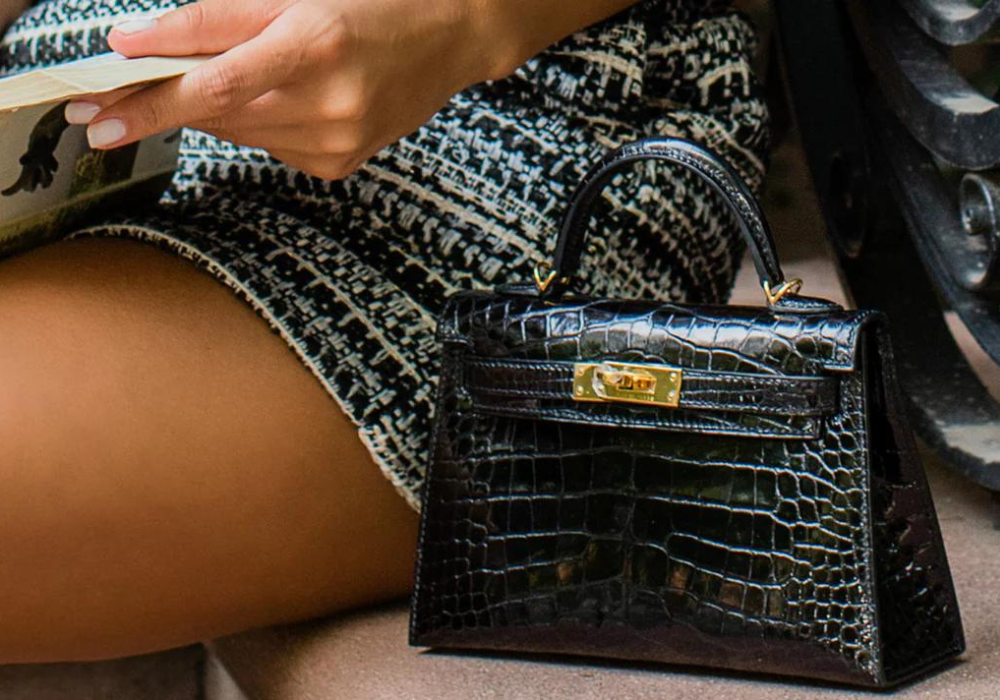
Browse Barenia in the current JaneFinds collection →

Leave a comment

This site is protected by hCaptcha and the hCaptcha Privacy Policy and Terms of Service apply.

All comments are moderated before being published.

Read more

Hermès So Blacks - All the way Back

So Black: The Complete Hermès Collector's Guide

The full history of the Hermès So Black collection — Gaultier's final show, the original 2010–2011 production, the Millennium Moonlight Kelly predecessor, auction performance, and what completeness...

Read more
Hermès Mini Kelly Mania

The Mini Kelly: A Complete History from 1980 to the Mini Kelly II

The full generational arc of the Hermès Mini Kelly — the 20cm original (1980–2006), its four construction types, rare material variants, and the Mini Kelly II released in 2016. With auction data an...

Read more
JANEFINDS STAFF
5 min read

Barenia Leather: The Hermès Heritage Leather

While today Hermes is known as the epitome of luxury, crafting the highest quality products for all aspects of life, their roots trace back to a purely equestrian heritage. Hermes began making saddlery in Paris in 1837, and has evolved over the following centuries expanding into every corner of their clients’ lives, ma
The Beauty of Hermès Barenia
The JaneFinds Archive

Barenia Leather

The Hermès heritage leather — tanning, patina, Barenia Faubourg, and why it matters to collectors

Hermès is a house whose identity is inseparable from its equestrian origins. The saddlery that Thierry Hermès established in Paris in 1837 produced bridle leather that had to perform under the most demanding conditions — outdoor use, moisture, constant friction — and age beautifully in the process. That standard of leather, refined over nearly two centuries, is what Barenia represents. It is the leather Hermès holds in higher regard than any other in its catalog: a buttery calfskin with exceptional natural fragrance, used in equestrian accessories for decades before being introduced to handbag production in the 1970s.

Today Barenia remains in production, though output is extremely limited. The standards for hides are uncompromising — any imperfection in the skin disqualifies it from Barenia production — and the tanning process itself is one of the most time-intensive in the house's catalog. The result is a leather that cannot be produced at scale, which is why finding a Barenia bag at boutique has always been a rare experience.

Hermès Osier Picnic Basket Wicker and Barenia leather
Hermès Osier Picnic Basket — Wicker and Barenia leather. The Barenia trim illustrates how this leather has been used beyond bags, throughout the Hermès object catalog.
Hermès Kelly 35 Blue Denim and Barenia Gold Hardware
Kelly 35 — Blue Denim and Barenia, Gold Hardware. The Barenia in this bicolor configuration shows the leather at its most versatile — its natural Fauve tone anchoring the denim blue.

The tanning process

The process for creating Barenia leather is highly guarded. Only a small number of master tanners have developed the expertise required. The leather undergoes vegetable tanning — a slow, traditional process that results in the specific hand, fragrance, and aging behavior that defines Barenia. [Note for Jane: the original post described "double tanning in chrome and vegetable dyes" — please verify. Barenia is generally understood to be a pure vegetable-tanned leather; the chrome reference may be incorrect.]

Following tanning, the skins are soaked in a mixture of oils for several weeks before being dried, finished, and cut for production. The resulting leather has a characteristic suppleness and a rich, distinctive fragrance that is immediately recognizable. The brand stamp is embossed without foil — directly into the leather surface — and the bags are assembled by double saddle-stitching with beeswax-coated natural linen thread.

Patina — what Barenia actually does with age

The patina behavior of Barenia is the central reason collectors seek it. The leather is designed to evolve — every hour of carry, every contact, contributes to a deepening and enrichment of tone that no other standard Hermès leather replicates in the same way.

The intense oil treatment gives Barenia a near-miraculous scratch response. Most light scratches can be massaged back into the surface with a fingertip — the oils in the leather redistribute and the mark disappears. This is not true of heavily scored scratches, but the day-to-day contact marks that accumulate on any regularly carried bag are largely self-healing on Barenia. Water resistance is similarly strong — raindrops evaporate within minutes without leaving a trace.

The color evolution is the defining characteristic. The natural Fauve (warm caramel tan) deepens as the leather absorbs oils from handling and ambient contact. The range of saddle tones it moves through — from fresh pale tan to deep burnished amber — is the patina that Barenia collectors are specifically acquiring. A well-worn Barenia Birkin from the 1990s carries a depth of color that a new bag cannot replicate, and that depth is considered a feature, not wear.

Barenia Faubourg

Hermès developed a newer variant called Barenia Faubourg — tanned by the same process as classic Barenia, but then pressed with a grain similar to Togo or Clémence. The grain serves two functions: it strengthens the leather's resistance to scratching (the pressed surface is more resilient than the smooth Barenia surface), and it introduces a velvety tactile quality distinct from the classic version.

The tradeoff is water resistance. Classic Barenia's smooth surface repels water effectively. Barenia Faubourg, with its grain texture, is more vulnerable to water penetration. The patina behavior is similar — the leather ages and deepens over time in the same way — but the grain simultaneously moderates the scratch sensitivity that defines the classic leather's maintenance experience.

Classic vs. Faubourg at a glance: Classic Barenia — smooth surface, extraordinary water resistance, scratch self-healing, maximum patina depth. Barenia Faubourg — pressed grain surface, more scratch-resistant, more water-vulnerable, similar patina behavior with a textured visual character.

Colors and availability

Barenia is produced in a deliberately narrow color range. The classics are:

  • Fauve — the natural tan. The reference Barenia color and the one most associated with the leather's patina character.
  • Noir — black. Less common than Fauve; the patina behavior is different given the dye base, but the leather's surface properties remain the same.
  • Ébène — dark chocolate brown. Rare in production.
  • Vert Olive — olive green. Among the rarest Barenia colorways encountered on the secondary market.

A higher-than-average percentage of Barenia bags are produced with brushed hardware — both Brushed Gold (BGHW) and Brushed Palladium (BPHW). The matte hardware finish pairs naturally with Barenia's matte surface, and the combination has a specific collector following.

Bag styles produced in Barenia

Despite its rarity, Barenia has been used across nearly the full Hermès bag catalog over the decades — not only the primary formats but also many now-discontinued styles. Documented Barenia productions include the Birkin, Kelly, HAC, Constance, Evelyne, Picotin, Sac à Dépêches, Verrou, Plume, Aline, Vespa, and Trim, among others. Many Crinoline bags carry Barenia trim — a pairing that has its own logic, as Crinoline is woven from horsehair, connecting both materials to the house's equestrian origin.

The broad range of formats means that a dedicated Barenia collection can be assembled across multiple scales and carry styles, though sourcing any specific configuration requires patience and access to the right secondary market channels.

The collector case for Barenia: Barenia connects every element of what makes Hermès distinctive — the equestrian heritage, the mastery of natural materials, the expectation that the object improves with use. A Barenia Birkin or Kelly is not a bag that is preserved unchanged; it is a bag that is meant to be carried, marked by experience, and deepened by decades of use. For collectors who understand that, it represents the house's intentions more completely than any other leather in its catalog.

Browse Barenia in the current JaneFinds collection →