
Hermès as a Collected Asset
A practical guide to buying by budget — $10K, $50K, and $100K

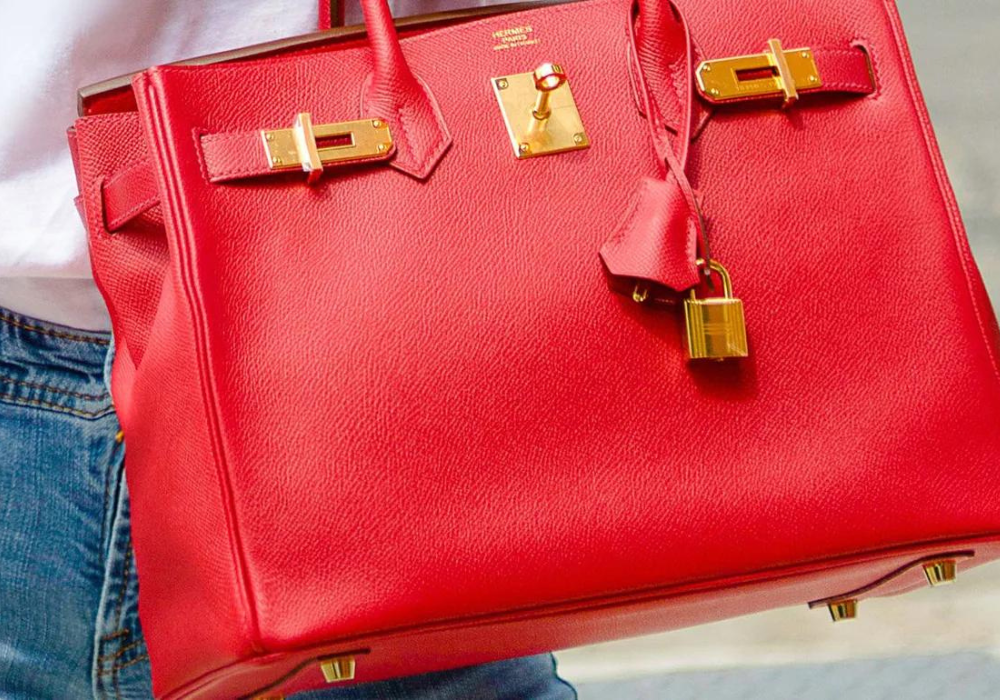
Auction records for Hermès bags have become regular news. The Birkin and Kelly are described frequently — and not inaccurately — as assets that have outperformed gold and tracked favorably against the S&P 500 over certain periods. That framing draws buyers who have never collected a handbag into a market they don't fully understand.
The reality is more specific. Not all Birkins are the same asset. The secondary market for Hermès operates closer to the art market than the commodity market — price is determined by configuration, condition, provenance, timing, and the specific preferences of whoever is buying. A 35cm Birkin in Étoupe Togo may not appreciate; a 25cm Kelly in Ombré Lizard might triple. Huge amounts of money have been made and lost in this market by buyers who didn't know the difference.
The most durable approach is to buy what you would want to own regardless of what the market does — bags of this caliber are collectibles before they are financial instruments. Two people in an auction room can move the market by leaps and bounds in a single afternoon. But if you have capital to allocate and want to position it as intelligently as possible, what follows is specific guidance by budget level.
These are not financial recommendations. They are collector's observations from 30 years of authentication experience and direct participation in the secondary market at every level.
At $10,000, the strategy is to find something with a differentiating characteristic — an unusual material, hardware variation, or format that separates the piece from a standard leather bag in a standard color. Unremarkable bags in unremarkable configurations at this price point are unlikely to appreciate meaningfully; what moves fastest and furthest are the pieces that collectors recognize as distinct.
Canvas bags with interesting patterns
Canvas Birkins and Kellys in patterned weaves — Mosaic, Potamos, Jumping — can be found in the $10,000 range and have a specific collector following that solid-canvas bags (Officer, Crinoline, plain Toile) do not. The pattern is the point: it reads as intentional rather than utilitarian, and that distinction matters to secondary buyers. Avoid solid Toile in this budget; it doesn't carry the same premium and can be difficult to move.

Doblis Suede
If you see an all-suede Doblis Birkin or Kelly at this price, buy it. The operative word is all-suede — handles, body, sangles, everything. These are genuinely rare in the secondary market; even examples in less-than-pristine condition are difficult to source. The suede develops a patina with use that is entirely its own, and the material's scarcity has only increased as production has declined.
Two formats to avoid at this budget tier: Grizzly bags with leather trim at the top, and Ghillies bags with suede panels. Neither has the collector following of an all-suede Doblis, and the price ceiling for these formats is lower.

Vintage 20cm Kelly
A vintage 20cm Kelly at this price is a strong acquisition — specifically the versions with the round top handle, not the later shoulder-strap-only configuration. Most vintage 20cm Kellys appear in Black Box Calf with Gold Hardware, which is the canonical combination; anything outside of that is unusual and worth giving serious consideration. Box Calf is one of the most refurbishable Hermès leathers, so don't rule out an example with surface scuffs — the underlying leather typically has more life in it than the surface condition suggests.
Mini Kelly II
If you can find a current-production Mini Kelly II Sellier in this budget, that is the strongest $10,000 acquisition currently available. Retail is approximately $7,000; secondary market pricing has consistently exceeded $17,000 for standard leather examples, and the exotic configurations trade substantially above that. Production is limited and has been further restricted in recent seasons. The challenge is sourcing one — they are rarely offered in the secondary market at any price close to retail.
$10K tier summary: Look for differentiation — unusual material, unusual format, or unusual hardware. A standard Togo Birkin 35 in a common color at this price will not appreciate the way a Doblis suede Kelly or a patterned canvas Birkin will. Condition matters but is not absolute; Box Calf and Togo are forgiving leathers that respond to professional restoration.
Avoid at this tier: Standard grained leather (Togo, Clemence, Epsom) in common colors with no distinguishing characteristics. Solid Officer or Crinoline canvas. Grizzly bags with leather trim. Ghillies suede panels. Any bag where the primary appeal is size alone.
With $50,000, the strongest approach is not to concentrate in one standard bag but to split between two legitimate rarities — pieces where the secondary market has already established a price trajectory, not pieces where you're speculating on future demand. The two materials most worth prioritizing at this level are Doblis Suede and Lizard.
Lizard
Lizard Birkins and Kellys in standard colors (not Ombré) can still be found in the $20,000–$30,000 range. The top of the Lizard market has recently broken $100,000 — driven primarily by Ombré configurations that you are very unlikely to find for under $50,000. But non-Ombré Lizard examples in unusual colors have been pushing above $50,000, which means you are buying below the current ceiling with documented appreciation history. Lizard is fragile — condition is the dominant pricing variable — so examine any example closely and factor restoration costs into your evaluation.

Doblis Suede — at larger budget
For the remainder of a $50,000 budget, a Doblis Suede Birkin or Kelly — again, all-suede, handles and everything — under $25,000 is a strong acquisition at any color. Suede Birkins and Kellys are so infrequently available that color preference is secondary to the opportunity. The all-suede Doblis with Porosus Crocodile combination (Black Doblis body, Crocodile center panel) is the most ambitious Doblis configuration and commands premiums from both suede and exotic collectors simultaneously.


Alternatively: a portfolio approach
A second valid approach at $50,000 is to build five pieces from the $10,000 tier — prioritizing Doblis Suede, patterned canvas, vintage 20cm Kellys, and Mini Kelly IIs across a spread of entry points. This approach carries more liquidity risk (smaller bags are easier to sell, but the secondary market for any single piece is smaller) but distributes your exposure across multiple configurations rather than concentrating in two.
$50K tier summary: Split between two rarities with established market trajectories. Lizard and Doblis Suede are the two materials with the strongest collector followings relative to their current secondary market pricing. Don't spend $50,000 on three or four standard leather bags hoping they appreciate — they will not move as fast as a single well-chosen exotic or suede.
Avoid at this tier: Standard grained leather bags in common colors, even in small sizes, as the primary acquisition. Grizzly and Ghillies suede. Any Lizard bag with condition issues that cannot be professionally assessed before purchase. Exotic bags without authentication documentation.
At $100,000, the buying universe is wide — you can access nearly any Birkin or Kelly configuration currently in the secondary market, with the exception of Diamond Himalayan examples, which routinely trade above this threshold. The question at this budget level is not what you can afford but what has the most defensible price floor.
Himalayan Birkin or Kelly — any size
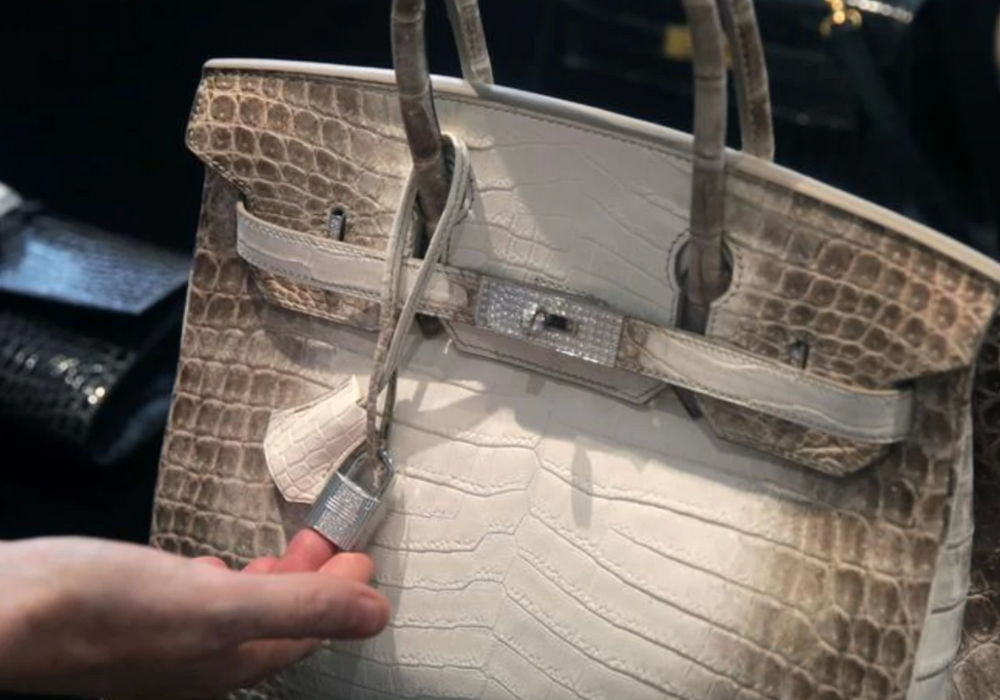
The strongest single acquisition at this budget is a Himalayan Birkin or Kelly in good condition, any size. The full secondary market history on Himalayans shows consistent appreciation across all formats — Birkins and Kellys of all sizes. By 2019, average Himalayan auction prices were approximately $152,000. Top examples now regularly exceed $200,000. If you can find a Himalayan in this budget today, you are buying below what the market has repeatedly demonstrated as a clearing price for comparable examples.
Kelly Himalayans have outperformed Birkin Himalayans on a per-size basis in recent auction cycles — the 28cm Kelly Himalayan has averaged approximately $147,000 with records above $240,000. If you have a choice between a Birkin and a Kelly Himalayan at comparable prices, the Kelly is statistically the stronger position.


Gris Cendré — if you can find one
At $100,000 you may also be able to locate a Gris Cendré Himalayan — the rarest Himalayan variant, presenting a deeper gray ombré distinct from the standard white-center gradient. Only four examples are publicly documented. If one surfaces at this price, the calculus is straightforward: you are acquiring one of four known examples of the rarest Hermès exotic configuration in circulation. The secondary market for something this scarce does not follow normal pricing logic.
What to avoid: Diamond bags as a primary allocation
Solid-color Diamond Birkins and Kellys — standard-color exotics with Diamond hardware, not Himalayan skin — have sold consistently in the $100,000 range for approximately a decade. They are not appreciating the way Himalayan examples are. A diamond bag at this budget is effectively a store of value rather than an appreciating asset: you will likely recover your investment, but you are unlikely to significantly exceed it. If you have $100,000 to commit, a Himalayan in good condition is a stronger allocation than a diamond-hardware bag in a standard color.
$100K tier summary: The Himalayan has the most documented appreciation history of any single Hermès configuration. Buy one in good condition at any size — condition matters more than size at this level. If a Gris Cendré surfaces, prioritize it. Do not use this budget on a Diamond-hardware bag in a standard color if appreciation is the goal; that configuration has functioned as a value lock, not an appreciating asset.
Avoid at this tier: Diamond-hardware bags in standard colors as a primary allocation if appreciation is the objective. Any Himalayan in compromised condition — at this price, condition is the variable that determines whether the piece trades at $90,000 or $200,000. Himalayans without authentication documentation or verifiable provenance.
What actually drives secondary market value
| Variable | Impact | Notes |
|---|---|---|
| Size | High | Smaller sizes command higher premiums per the general Birkin and Kelly pattern. B25 and K25/K28 Sellier are the strongest configurations across most materials. |
| Material | Very high | Exotic skin vs. standard leather is the largest single pricing variable. Within exotics, Niloticus and Porosus Crocodile outperform Alligator, which outperforms Ostrich and Lizard. |
| Color | High | Black, Gold, and Étoupe are the most liquid in standard leathers. In exotics, the Himalayan gradient and Ombré Lizard are the most actively traded specific colorways. |
| Hardware | Moderate to high | GHW and PHW are the most liquid. So Black adds significant premium. Rose Gold and Permabrass are premium but serve smaller buyer pools. |
| Construction | Moderate | Sellier commands 20–30% premium over Retourne in equivalent configurations. More technically demanding; fewer craftspeople produce it. |
| Condition | Very high | Pristine vs. Excellent vs. Good can represent 20–40% price variance on identical configurations. The more exotic the material, the higher the condition premium. |
| Provenance | Moderate | Original box, dust bag, receipt, and authentication documentation add 10–15% to comparable transactions. At the high end ($100K+), documented provenance is a prerequisite for top pricing. |
| Stamp year | Moderate (vintage) | Pre-2000 Box Calf pieces carry a patina premium that modern production cannot replicate. The 2010–2015 Square era is considered a quality benchmark in current production. |
| Rarity | Very high (specific) | Rarity only drives value when there is established collector demand for the rare configuration. A rare bag in an unpopular format is not the same as a rare bag in an actively sought one. |
Risk factors every collector should understand
Market timing
Secondary market pricing shifts with auction cycles, macroeconomic conditions, and collector preferences. A configuration that averages $150,000 in one auction cycle may average $120,000 in the next. The Hermès secondary market has shown long-term appreciation, but short-term variance is real and can be significant for any specific piece.
Trend drift
The 35cm Birkin dominated the secondary market for most of its history; the 25cm Birkin and 20cm Kelly are now the strongest demand centers. These shifts happen on a years-long timescale, not overnight, but they do happen. Configurations considered highly desirable today may soften relative to new preferences.
Condition deterioration
The condition of a Hermès bag is not static. Improper storage, exposure to humidity or light, and regular use all degrade condition over time — and condition is the most controllable variable affecting resale value. Every percentage point of condition degradation costs more in dollar terms at the high end of the market than at the low end.
Authentication risk
The counterfeit market has become sophisticated enough that surface-level inspection is insufficient. At the $10,000 level, the risk is real. At the $100,000 level, it is existential — a counterfeit Himalayan holds no value. Authentication is not optional; buy only from sources with verifiable authentication credentials and documentation.
Liquidity constraints
A Hermès bag is not a liquid asset. Selling at full market value requires finding the right buyer at the right time — a process that can take weeks or months for unusual configurations. Common configurations in standard leathers are more liquid; rare exotics at high price points take longer to move even in strong markets.
Market saturation
If a significant volume of a specific configuration enters the secondary market simultaneously — through estate sales, collection liquidations, or auction house consignments — it can compress pricing for that configuration. This is most likely to affect the most common configurations, not the rarest ones.
Storage and maintenance costs
Maintaining condition requires proper storage, periodic conditioning (for certain leathers), and professional cleaning when needed. Climate control, insurance, and safe storage have real costs that should be factored into any return-on-investment calculation.
Seller relationships
The best pieces in this market rarely reach general listing. Strong relationships with authenticated dealers can yield access to rarities that never surface publicly — but building those relationships takes time and consistent transaction history. Don't be insulting with a low offer; everyone in this market understands price direction, and relationships that survive negotiation are worth more than a single deal.
Authentication is non-negotiable
The Hermès secondary market is one of the most actively counterfeited luxury markets in the world. Pieces that closely mimic authentic examples are being produced at every price point, including configurations that historically were considered too difficult to replicate. The markers below are starting points — not a replacement for expert authentication.
Walk away immediately if you see: Dust bag with printed (not stitched) Hermès branding. Hardware that feels lightweight or shows uneven plating at edges. Stitching that is uneven, inconsistent in angle, or appears machine-made — Hermès uses waxed linen thread, hand-pulled. Date stamp that is crooked, too deeply impressed, or positioned incorrectly for the claimed year and model. Hermès Paris stamp with thin, inconsistent, or poorly-set lettering. A price significantly below market — if it appears too favorable, it is.
For any transaction above $10,000, independent authentication documentation is standard practice. JaneFinds authenticates every piece in its collection before listing. If you are buying from another source, verify their authentication credentials and ask for documentation. For a complete reference on authentication markers, see the JaneFinds authentication guide.


Leave a comment
This site is protected by hCaptcha and the hCaptcha Privacy Policy and Terms of Service apply.