
The JaneFinds Archive
The Complete Hermès Leather Reference
Every leather — current production, special categories, and discontinued — with swatch images, origin dates, and characteristics
Hermès uses more than 30 distinct leather varieties across its bag, accessory, and ready-to-wear catalog. Each has a specific grain structure, finish, and behavioral profile that affects how the bag wears, ages, and positions in the secondary market. This reference covers the complete Hermès leather taxonomy organized by hide family, with discontinued leathers noted separately within each category.
Calfskin — Natural Grained
Peaux Classiques · Veau · Grain Naturel
Veau Togo
Introduced 1997
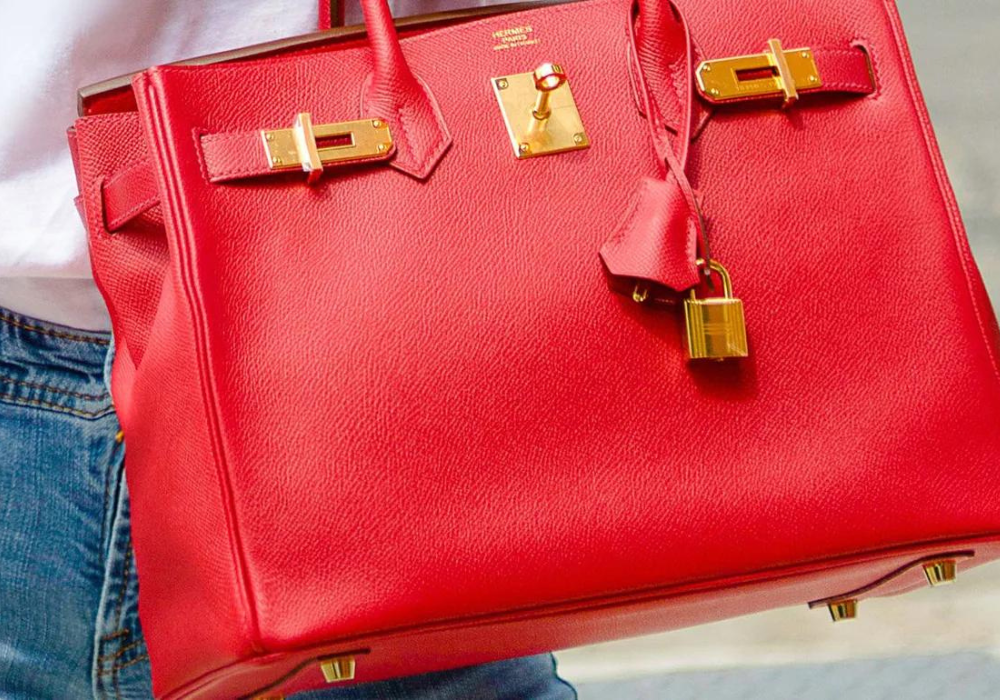
Baby bull calf. Fine pebbled grain, semi-matte, supple with good shape retention. Lighter than Clémence. Scratch-resistant. The most widely produced Birkin and Kelly leather. Available in the full Hermès color palette across all bag formats and small leather goods.

Taurillon Clémence
Bull calf · Originally "Mu"
Larger, flatter grain than Togo. Heavier, more supple, with a pronounced slouch. Fully matte. The weight of a Clémence Birkin 30 is noticeably heavier than Togo. Natural grain variation across each hide is more pronounced than in Togo.

Evergrain
Male calf · Discontinued
Irregular large grain, fully matte. High water resistance — the most weather-resistant of the standard calfskins. Used primarily in the Garden Party line. More textural variation than Togo. Production discontinued; now found on secondary market examples from the 2000s–2010s.

Negonda
Introduced 2007
Male calf. Developed primarily for the Garden Party line. Color allocation differs from the Buffle Sindhu, resulting in different color availability between the two leathers used in this format. Rarely encountered on secondary bags.

Fine Grain Calfskin
Introduced 2013
Male calf with firm structure and matte texture. Produced primarily in small leather goods — wallets, cardholders, and accessories. Not used in standard bag production. Limited color availability.
Calfskin — Processed Grained
Veau · Grain Pressé
Veau Epsom
Introduced 2003 · Replaced Courchevel
Heat-pressed crosshatch grain on male calf. The most rigid standard calfskin — holds shape independently. Lightweight. Excellent color saturation. Scratch-resistant surface. The reference leather for Kelly Sellier. Full palette available across bags and small leather goods.

Processed Calfskin
Introduced 2009 · Bull calf
Fine pressed grain on male cowhide. Comparatively softer than Epsom with a slightly less rigid structure. Developed primarily for bag formats in a limited color range. Not as widely available as Epsom.

Vachette Country
Introduced 2012 · Female calf
Processed female calfskin with firm, structured hand. Developed primarily for the Garden Party line. The only standard Hermès leather sourced from female cattle. Limited color range.

Veau Grain d'H
Introduced 2012
Fine structured pressed grain with the H monogram embossed into the surface texture — the defining characteristic of this leather. Soft hand with protective grain. Available across bags and small leather goods in a moderately wide color range.
Calfskin — Smooth
Veau · Lisse
Veau Swift
Introduced 2006 · Replaced Gulliver
Smooth male calf, semi-matte finish. The most vibrant color saturation of any standard Hermès leather — colors appear more intense on Swift than on any other calfskin. Soft and supple. More susceptible to scratching than Togo or Epsom, which is the tradeoff for its exceptional color quality.

Vache Naturelle
Natural · Black only
Unprocessed male cowhide — the surface is not treated beyond basic tanning. Very delicate. Develops a rich patina with use, shifting in tone as the leather's natural oils redistribute. Available in Natural and Black only. Related to Barenia but with a distinct feel.

Veau Barenia
Hermès saddlery leather
Male calf, untreated surface, fully matte. Elasticity and suppleness characteristic of natural tanning. As the leather's oil content changes over time, the color deepens and a slight sheen develops — a controlled, intentional aging process. The most demanding leather to maintain correctly. Collector cult status.

Veau Box Calf
Named for Joseph Box, 1890s
Male calf, polished to a high gloss. The oldest Hermès bag leather still in production. Rigid when new, developing characteristic crinkle lines with age. The luster deepens over years of use. Almost exclusively Sellier construction. Scratches visibly but polishes back. The reference leather for vintage Kelly collecting.

Smooth Calfskin
Brilliant gloss finish
Male calf, smooth and fine, with a brilliant gloss finish. Similar to Box Calf in sheen but different in hand feel. Develops richness and depth with use over time. Available in a selective color range.

Veau Sombrero
Introduced 2011
Male calf, smooth surface with a matte finish. Distinctive skin-like texture — fine, close, and firm. The hand feel is closer to skin than most calfskins, with a distinctive supple firmness. Produced in a selective range.

Veau Chamonix
Chamonix, Mont Blanc, French Alps
Male calf, smooth surface. Functionally a matte version of Veau Box — the same fine-grain calfskin finished without the gloss polish. Retains the firmness and hand of Box Calf while reading quieter in presentation. Named for the Alpine region of origin.

Veau Derma
Introduced 2004 · Caravan only
Male calf, notably thin, with a soft and smooth texture. Produced exclusively for the Hermès Caravan — a specific product format. Not available in standard bag production. Among the most narrowly distributed Hermès leathers.

Veau Evercalf
Male calf · Soft smooth
Male calf with a soft, smooth, matte surface. A quieter calfskin without the assertiveness of Box or the patina character of Barenia. Produced in a selective range. Less commonly encountered on the secondary market than Swift or Togo.
Calfskin — Suede & Nubuck
Veau · Velours · Nubuck
Veau Troïka
Early-stage calf · Lustrous
Fine, smooth calfskin processed from early-stage calf. Distinctive coat with natural luster. The smoothest and most refined texture in this category — closer to smooth calfskin than suede in character. Limited production.

Veau Velours / Doblis
Nubuck · Velvet finish
Male calf nubuck — the surface has been trimmed to a dense velvet finish. The most refined suede Hermès produces. Deep, consistent nap with exceptional tactile quality. Requires careful maintenance; water and contact marks are visible on the surface. Limited production, limited color range.

Veau Grizzly
Nubuck · Short velvet
Male calf nubuck with a shorter, more compact trim than Doblis. The shorter nap produces a different surface texture — less plush, more tightly uniform. The same maintenance requirements as Doblis apply.
Calfskin — Discontinued
Veau · Discontinué
Vache Liégée
Introduced 2004 · Discontinued
Cowhide with luster and a processed grain. Developed primarily for bags in a limited color range. Primarily encountered in Garden Party bags from the mid-2000s. Secondary market interest as a discontinued leather.

Ardennes
Discontinued · Vache Liégée successor
Male calf from the Ardenne region (northern France and southern Belgium). Dense pressed grain with firm structure. Discontinued with Vache Liégée introduced as its successor. Found on vintage Kellys from the 1980s–1990s. Among the more sought-after discontinued leathers.

Veau Gulliver
Discontinued · Replaced by Swift
Male calf, smooth texture, soft hand. Originally also known as "Mu." Discontinued when Veau Swift was introduced in 2006. Found on bags from the 1990s and early 2000s. The Swift retains its smooth, saturated-color character.

Veau Graine
Discontinued · White and Natural only
Male calf, thin pressed grain, matte texture. Available in White and Natural only. Succeeded by Veau Epsom. Rarely encountered; when found, it predates the 2003 Epsom introduction.

Veau Graine Courchevel
Discontinued · Replaced by Epsom
Male calf, glass-processed and press-processed. Thin pressed grain with luster. The direct predecessor to Epsom — Epsom's crosshatch grain replaced this earlier pressed-grain leather in 2003. Found on bags from the 1990s.

Veau Graine Lisse
Discontinued · Replaced by Epsom
Male calf, glass and press processed with thin grain and luster. Developed as a successor to Courchevel and Veau Graine, then itself replaced by Epsom. The transitional pressed-grain leather between the two eras.
Chèvre — Mountain Goat
Peaux Classiques · Chèvre · Grain Naturel
Chèvre Mysore
Introduced 2002 · Mountain goat
Mountain goat — natural grain size. Because sufficiently large mountain goat hides are limited, this leather is produced primarily in small leather goods and the Birkin 25. Among the more unusual Chèvre variants for bag collectors.

Chèvre Coromandel
Mountain goat · Natural luster
Mountain goat with a distinctive natural luster and characteristic grain pattern. The surface has more visual presence than Mysore — the pressed grain and natural sheen are the defining features. Produced in small leather goods and select bag formats.
Chèvre — Discontinued
Chèvre · Discontinué
Vibrato
Discontinued · Layered goat
Technically demanding: dyed mountain goat skin is stacked in multiple layers, then cut to expose the vertical color pattern across the cross-section. No two pieces are identical. Wide color variation was available. Discontinued. Secondary market examples are actively sought by collectors who appreciate its construction complexity.
Buffle — Buffalo
Peaux Classiques · Buffle
Buffle
Buffalo hide
Buffalo leather with a slightly rough, natural grain. High water resistance. Used widely in the Garden Party line for its durability and weather-tolerant surface. Heavier hand than calfskin. Wider color availability than other buffalo variants.

Buffle Sindhu
Introduced 2007 · Water buffalo
Water buffalo, Garden Party only. Color allocation differs from Negonda — the two leathers are used selectively across the Garden Party color range, with specific colors assigned to one or the other.

Buffle Gala
Water buffalo · Small items only
Water buffalo with fine, intricate grain relative to other buffalo leathers. The grain scale and surface characteristics limit its use to small leather goods and accessories — the hide characteristics don't scale to larger bag formats.

Buffle Pondichéry
Introduced 2009 · South India
Water buffalo from the east coast of southern India (Pondicherry region). Fine, intricate grain. Like Buffle Gala, produced exclusively in small leather goods and accessories. The regional origin is reflected in the name.
Buffle — Discontinued
Buffle · Discontinué
Dalmatien
Discontinued · Double-dyed
Double-dyed buffalo hide — two separate dye applications create a spotted surface pattern. Wide color variation was available. Discontinued. A novelty leather with strong collector interest precisely because of its discontinued status and distinctive visual character.
Crocodile — Shiny (Lisse)
Peaux Précieuses · Crocodile · Lisse
Porosus Crocodile Lisse
Shiny · Saltwater croc · Australia / SE Asia
Saltwater crocodile (Crocodylus Porosus). The finest crocodile skin — smallest, most symmetrical scales. Agate-polished to a shiny "Lisse" finish. Each scale is individually polished. The apex calfskin in the Hermès leather hierarchy. CITES documentation required.

Niloticus Crocodile Lisse
Shiny · Nile croc · Zimbabwe
Nile crocodile (Crocodylus Niloticus). Larger scales than Porosus, with excellent regularity. Agate-polished shiny finish. Used for the Himalayan gradient configuration. Second tier to Porosus in the crocodile hierarchy. CITES documentation required.

Alligator Lisse
Shiny · Mississippiensis · Louisiana/Florida
American Alligator (Alligator Mississippiensis). Agate-polished shiny finish. Distinct scale pattern from crocodile — umbilical scar visible on belly skin. Produced primarily in small leather goods and the Birkin 25. Different CITES documentation requirements from crocodile.
Crocodile — Matte
Peaux Précieuses · Crocodile · Mat
Niloticus Crocodile Mat
Matte · Nile croc · Zimbabwe
Nile crocodile finished with a matte process (wool felt and machinery polish) rather than agate polishing. The matte surface absorbs light rather than reflecting it, producing a more understated presentation than Lisse. Some collectors strongly prefer the matte finish for its depth.

Porosus Crocodile Mat
Matte · Saltwater croc
Saltwater crocodile with matte process finish. The same wool-felt matting technique applied to the finest crocodile skin. Produced in very limited quantities. At the intersection of the highest-grade exotic and the most collectible finish variant.

Alligator Mat
Matte · Mississippiensis
American Alligator with matte finish. The natural matte character of Alligator lends itself particularly well to the mat process — the result has a depth and texture distinct from both matte Niloticus and shiny Alligator Lisse.
Ostrich
Peaux Précieuses · Autruche
Autruche
Ostrich · South Africa / Australia
The distinctive quill-follicle pattern — raised round bumps from plucked feather follicles — is unique to ostrich. Three-dimensional under any light. Soft and supple despite the surface texture. Durable relative to its delicate appearance. Available across bags and small leather goods. Note: discontinued for Special Orders as of 2025.
Lizard
Peaux Précieuses · Lézard
Lézard Lisse
Shiny lizard · Southeast Asia
Lizard from Southeast Asia. Very small, uniformly scaled with a natural luster. Lightweight. The surface is more delicate than crocodile and shows scratches at stress points more readily. Produced primarily in small leather goods and the Birkin 25 due to hide size constraints.

Lézard Ombré
Debut 2007 F/W · Gradient lizard
Lizard processed with minimal alteration to preserve the natural surface texture, with a gradient dye applied. The ombré effect on genuine lizard scales penetrates into the scale structure rather than sitting on the surface — each piece has a unique gradient. Primarily small leather goods and Birkin 25. Among the most actively collected lizard configurations.
A note on exotic skins and authentication: Scale patterns on genuine Hermès exotic skins are three-dimensional — they cast micro-shadows under raking light. Embossed or printed exotic imitations are flat under the same light, regardless of how convincing they appear under direct overhead illumination. CITES documentation accompanies genuine crocodile and alligator pieces and is required for international transport. For a full authentication reference, see the JaneFinds authentication guide.


Leave a comment
This site is protected by hCaptcha and the hCaptcha Privacy Policy and Terms of Service apply.