
Hermès Bag Models
A collector's reference to Birkin, Kelly, Constance, and the secondary families worth knowing
Hermès produces a range of bag families that differ substantially in construction, hardware, intended use, and secondary market behavior. Understanding what distinguishes each model is the starting point for collecting deliberately rather than reactively. What follows is an orientation to the core families and the secondary models worth knowing.
Birkin

The Birkin originated in 1984 from a conversation between Jane Birkin and Hermès CEO Jean-Louis Dumas, but its structural lineage traces to the Haut à Courroies — the HAC — a much older travel bag that predates the Birkin design by decades. The HAC remains in production and is meaningfully different: taller than it is wide, with a longer strap system and a distinct silhouette, it attracts a dedicated collector following separate from the Birkin proper and is considerably rarer in comparable configurations.
Standard Birkin production spans 25, 30, 35, and 40 centimeters in Retourne construction. The 25 and 30 dominate current secondary market volume and command the strongest premiums. The 35, which led the market for much of the 2000s and early 2010s, has softened in relative demand but remains liquid. The 40 is comparatively rare and appeals to a specific collector profile — particularly men and buyers who use the bag for travel. The Birkin 25 in Sellier construction — stiffer, with exposed edges rather than turned-under seams — is occasionally produced but is not standard; encountering one warrants careful authentication.
The Micro Birkin (15cm) appeared briefly around 2011–2012 before being discontinued. At this scale the bag is jewelry-adjacent in both function and collector appeal; pristine examples from that window have genuine rarity value. The Birkin Cargo, introduced in 2021, adds exterior pockets to the standard silhouette in a toile-and-leather construction — a functional variation that has found strong collector interest since its release.

Value in the Birkin market is driven by material first, then size, then color, with hardware finish as a secondary factor. Exotic skin Birkins — Niloticus Crocodile, Alligator, Ostrich, Lizard — operate in a separate demand tier from smooth or grained calfskins and are subject to CITES documentation requirements that affect international transport. Niloticus Crocodile is the most prestigious exotic, used for the Himalaya Birkin; Alligator (Mississippiensis) is the second tier. JaneFinds holds the record for the highest price ever achieved for a single Hermès piece.
Kelly

The Kelly predates the Birkin by decades, originating as the Sac à Dépêches in the 1930s. Its association with Grace Kelly came from a 1956 Life magazine photograph in which she used it to shield her pregnancy from photographers. Hermès formalized the name in 1977.
The single most important technical distinction in Kelly collecting is construction: Sellier versus Retourne. Sellier is stitched on the outside with a rigid frame, producing sharp corners and a very structured silhouette with visible exterior stitching. Retourne is stitched on the inside and turned out, yielding softer edges and a slightly more relaxed profile. Both are produced across the same size range — 20, 25, 28, 32, 35, 40 — but certain leathers strongly favor one construction. Box calf is predominantly Sellier, where its rigidity reads best. Clemence and Togo are predominantly Retourne, where the softer leather suits the more relaxed form. A Kelly's construction affects not only its appearance but its long-term condition trajectory: Retourne handles heavier use more forgivingly; Sellier maintains its geometry better in controlled conditions and is generally preferred by collectors who prioritize presentation.
Clasp generations matter to collectors and to authentication. The Sellier H-clasp has changed subtly in proportion and mechanism across decades of production. Earlier clasps on vintage examples — particularly 1970s and 1980s Kellys — are distinct from current production and are one of the first details an authenticator examines alongside the interior stamp and stitching count. Certain vintage leathers, particularly Calf Box from the 1980s and early Ardennes, are no longer produced; these configurations command premiums on their own terms independent of color or hardware.
The Mini Kelly II — the 20cm with double gusset — is currently among the most demanded pieces in the secondary market. The Kelly Pochette (a flat clutch version without the gusset) and the Kelly Dépêches 25 (a document case derived from the original Sac à Dépêches name) occupy adjacent collector categories. As of 2025, Paris has restricted Special Orders to Mini Kelly II and Kelly Pochette only, compressing supply and driving secondary market premiums further.
Constance
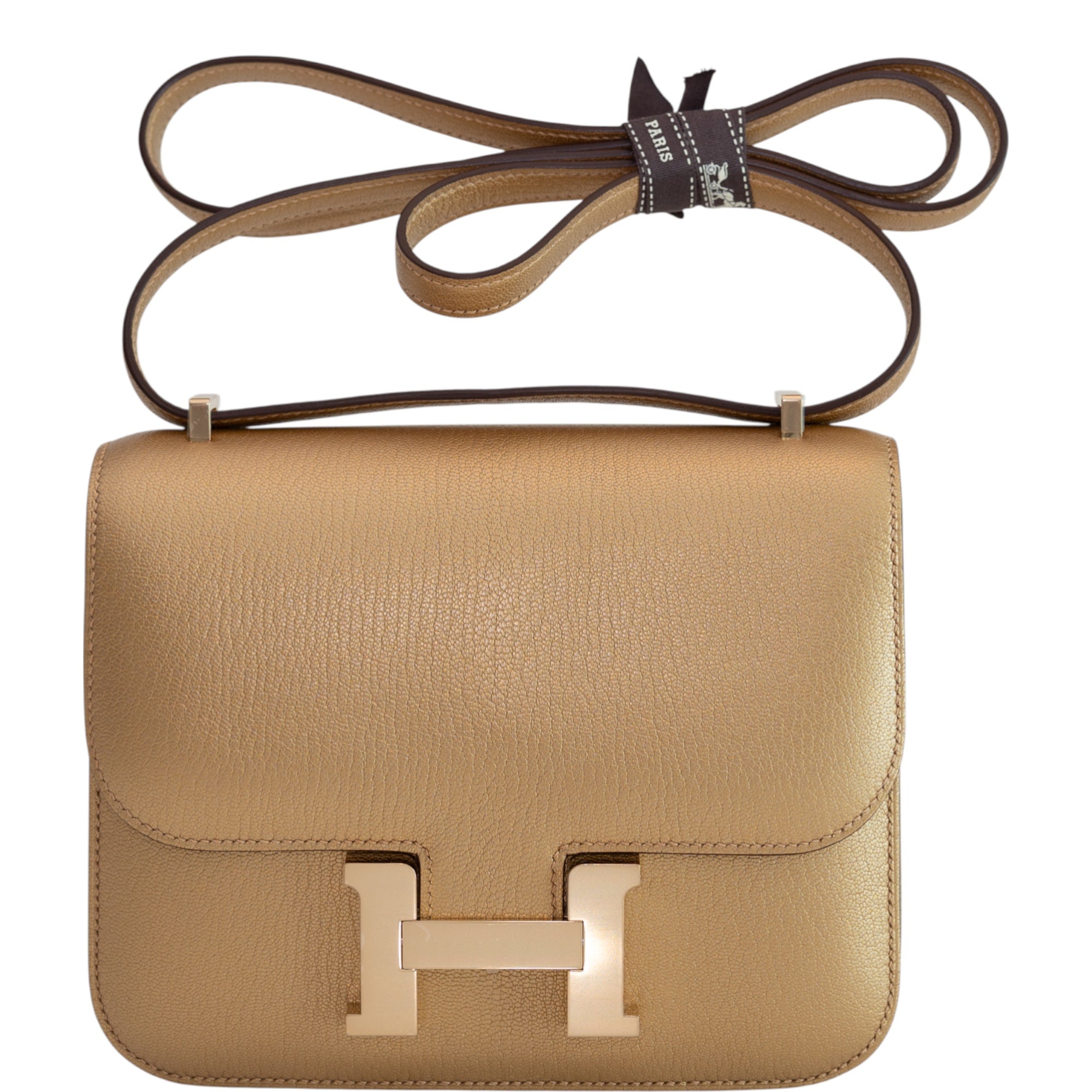
The Constance was designed in 1959 by Catherine Chaillet, a Hermès employee who named it after her daughter born that year. It is a structured shoulder bag defined by its H-clasp — a single sliding mechanism that functions simultaneously as the bag's primary structural closure and its most visible design element. The original 1959 clasp design has been refined over decades; collectors distinguish between clasp generations both for authentication purposes and for personal preference, as earlier proportions differ from current production.
The Constance is produced in three main sizes: Mini (18cm), standard (24cm), and Élan (a longer, flatter clutch proportion at approximately 25cm). The Mini 18 has the most active secondary market. The Élan is the rarest of the three in most leathers and commands significant premiums in exotic skin versions. A Constance Micro at approximately 14cm has appeared in limited production runs and is prized for its novelty.
The Constance in exotic skin — particularly matte alligator and shiny crocodile — is among the rarest standard-production Hermès pieces in the secondary market. In these materials, demand substantially outpaces supply, and condition premiums are steep: even minor clasp wear on an alligator Constance Mini affects resale value meaningfully. The standard 24cm in Epsom is the most liquid configuration for buyers who prioritize ease of future sale; the Mini in smooth calfskins occupies the opposite end — harder to find but higher in demand when located.
Evelyne

The Evelyne was introduced in the late 1970s and named after Evelyne Bertrand, who ran Hermès' equestrian department. It was designed specifically to carry grooming tools — the perforated H on the front panel provided ventilation for contents. The bag is unstructured, produced primarily in Clemence or Epsom, and carries an adjustable crossbody strap with no rigid frame or closure hardware beyond a single snap at the top.
Production spans four sizes: TPM (16cm, very small), PM (29cm), GM (33cm), and TGM (40cm, primarily a travel size). The TPM is the most actively traded size on the secondary market. The Evelyne carries no secondary market premium in standard leathers comparable to the Birkin, Kelly, or Constance — demand is stable and the bags are fairly available, making resale straightforward but appreciation modest. The exception is exotic trim versions: Evelyne with alligator handle details or limited edition hardware appears occasionally and commands collector interest outside the standard price range. For buyers who want Hermès leather quality in a lightweight crossbody at a lower secondary market entry point, it is the most practical option in the house's lineup.
Secondary models worth knowing
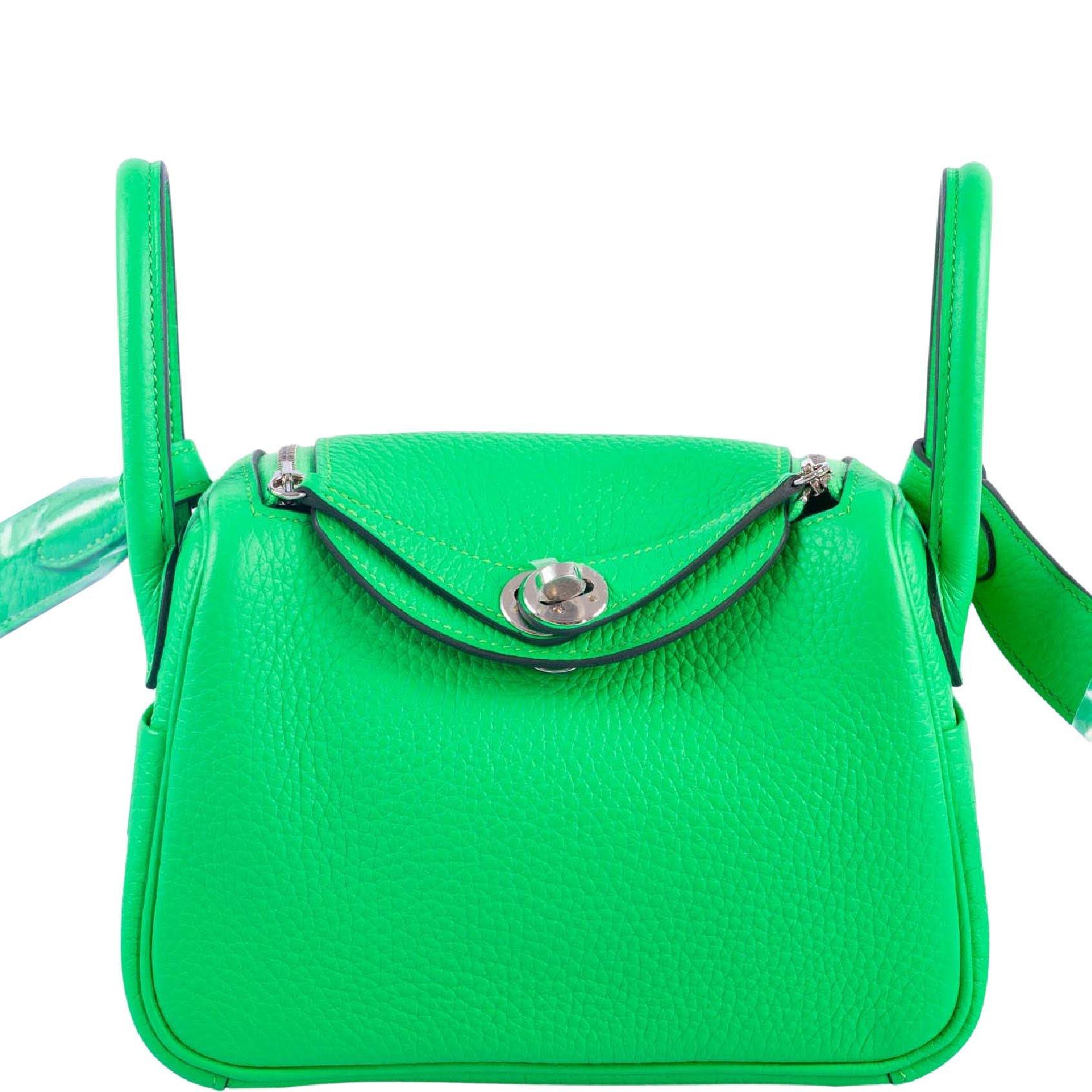

Lindy. A two-way zip bag introduced in 2006, produced in Mini (20cm), 26, 30, and 34cm. The Lindy's defining structural feature is its double zip opening — one from each end — which creates a wide, open-top profile when both are undone. Its bi-color leather option (two different leathers or colors split at the center seam) is one of the most popular Special Order configurations in the house, driving strong secondary market demand for unusual combinations. The Lindy Mini, which appeared around 2022 at 20cm with an extended crossbody strap, immediately became one of the most sought-after pieces from that season. Secondary market values for the Lindy in standard leathers have appreciated more steadily than the Evelyne over the past decade.
Picotin Lock. A bucket-format bag in PM (18cm), MM (22cm), and GM (26cm). Its origin is equestrian — the silhouette is derived from the feed bag (picotin is French for a dry measure of oats). The defining characteristic is the absence of a zipper or flap closure: a simple pull-through strap at the top with a padlock at the handle junction. The bag is unlined in standard leather versions, lightweight, and deliberately simple in construction. Standard leather Picotins trade at relatively modest premiums. Exotic-trim versions — the Picotin Touch, which pairs Clemence with alligator handles — are significantly more sought-after and have strong secondary records.
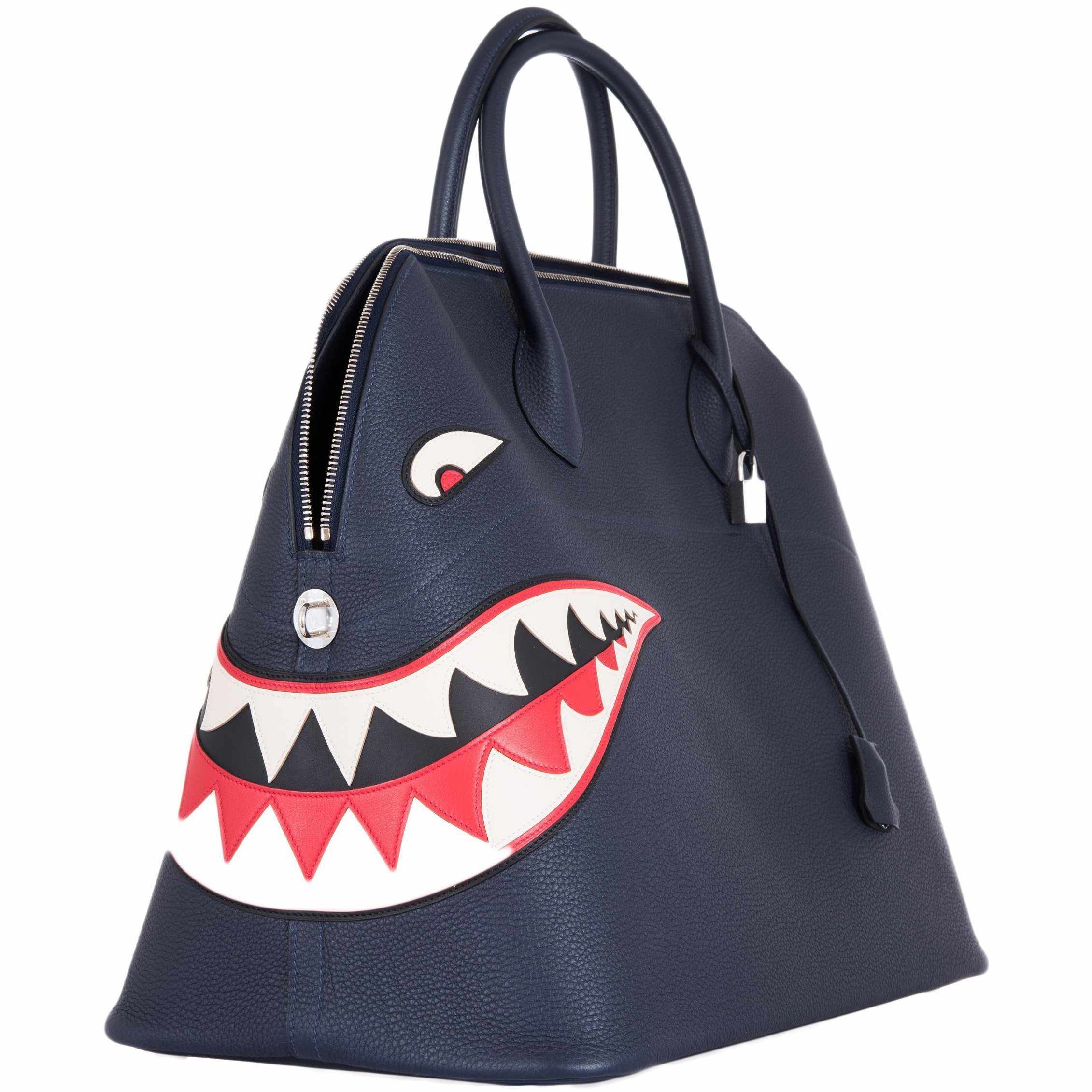
Bolide. The oldest bag in continuous Hermès production, introduced in 1923 as the first bag with a zipper closure — a genuinely radical feature for its era. The Bolide's silhouette (a rounded, rigid barrel shape with a flat base) has not changed materially since its introduction. It is produced in a wide size range from 27 to 45cm. Collector interest has grown steadily over the past several years, partly because of the Bolide's historical position as Hermès' oldest bag and partly because vintage examples in rare leathers represent genuinely scarce collector objects. Limited edition releases — the Shark Bolide in 2017, various toile and exotic iterations — have kept the model active in contemporary collecting conversations.
Garden Party. A structured tote in toile and leather construction, produced in 30, 36, and 49cm (the Voyage). Functional design with a flat base, open top, and sturdy handles. Secondary market demand is modest relative to the bags above; the Garden Party is valued primarily as a practical daily tote rather than a collecting focus. The toile construction means it is generally more accessible in price than leather bags of similar origin.
Herbag. A canvas and leather combination bag with interchangeable bodies, designed by Martin Margiela during his Hermès tenure. The interchangeable format allows the leather flap and hardware to be swapped between different canvas body sizes. The most accessible Hermès bag by price in current production, and the only model in the house with genuine design modularity. Secondary market values are stable at modest levels.
Jypsière. A discontinued crossbody model derived from the Birkin's strap and closure system, adapted for shoulder wear with a longer adjustable strap. Production ended and the model has not been reissued; existing secondary market examples carry a modest rarity premium relative to their original retail position. The Jypsière 28 is the most collected size.
HAC (Haut à Courroies). The direct ancestor of the Birkin, originally designed in the early 20th century as a bag for carrying riding boots and a saddle. The HAC is taller than it is wide — the opposite proportion of the Birkin — and its strap system is longer and more pronounced. It is produced in 28, 32, 36, 40, 50, and 55cm. Smaller HAC sizes, particularly 28 and 32, are rarely encountered in standard production and command meaningful premiums. The HAC in exotic skin is among the rarest Hermès configurations in the secondary market; most examples that appear are in standard calfskins. For a complete HAC format reference, see the JaneFinds HAC Archive.
Where to start: For buyers entering the secondary market for the first time, the Birkin 30 and Kelly 28 in Black or Gold Togo with Gold or Palladium Hardware represent the most liquid positions in the house — deepest buyer pool, fastest secondary turns, and the strongest baseline for future sale. For buyers who want entry below that price point, the Evelyne PM or Constance 18 in Epsom offer genuine Hermès leather quality with more accessible secondary pricing. For the most complete size and format reference, see the JaneFinds Size Guide.


Leave a comment
This site is protected by hCaptcha and the hCaptcha Privacy Policy and Terms of Service apply.