Skip to content

Cart

Your cart is empty

Article: Collectible Hermès Bags: The Basics

The JaneFinds Archive

Collectible Hermès Bags: The Basics

How the secondary market actually works — and what separates a genuinely collectible bag from one that is simply expensive

Many bags can be called collectible in many ways — antique beaded purses, bejeweled minaudières, limited edition collaborations across any number of luxury houses. But the bags considered most collectible in any rigorous sense, the ones subject to intense scrutiny, sustained speculation, and a secondary market where prices consistently exceed retail, are the Hermès Birkin, Kelly, and Constance, and the variations of these models Hermès has produced over the past century.

A secondary market for these styles where prices surpass retail has existed for over twenty years. Understanding how that market works — how prices are set, what drives value, and how to collect in any meaningful way — requires understanding the forces behind it.

Hermès Kelly Un Point Sur Deux 28 Sellier Black Monsieur leather construction detail
Kelly 28 Sellier — Black Monsieur, Un Point Sur Deux stitching. The single-stitch construction visible here is among the rarest technical configurations in Kelly production — a detail invisible at distance but immediately legible to anyone who knows what they're looking at. This is the level of specificity that the collectible Hermès market operates on.

Why these three bags

Scarcity drives this market, and Hermès produces scarcity structurally rather than artificially. Each bag is made by hand, by one artisan from start to finish, in France. The dedication required to develop that skill to Hermès' standard is not in high supply. Neither are hides that meet their quality threshold — the rejection rate for leather at the tannery level is significant, and Hermès controls several of its tanneries outright to enforce that standard at the source.

As a family-owned company, Hermès has maintained these limiting qualities as brand heritage for nearly two centuries and has resisted every form of compromise on quality that would accelerate production. The result is a secondary market that has existed for over twenty years and that shows no structural signs of contraction.

Publicly, Hermès does not endorse the secondary market for its products. It is reasonable to speculate, however, that the house sees its benefit — a robust secondary market where bags sell for multiples of retail justifies prices at boutique that might otherwise seem difficult to defend. Though Hermès would argue its prices are justified by the quality of its products alone. And one could make the counter-argument that they're not high enough, given what people will pay above retail to acquire them.

Hermès Birkin 30 Gold Togo Gold Hardware
Birkin 30 — Gold Togo, Gold Hardware. The most liquid single configuration in the secondary market. This is what the baseline looks like.
Hermès Kelly 20 Mini II Sellier Black Epsom Palladium
Mini Kelly 20 II Sellier — Black Epsom, Palladium Hardware. The most allocated bag in current Hermès production, with secondary market premiums consistently above 140% of retail.
Hermès Constance 18 Soufré Yellow Epsom Palladium Hardware
Constance 18 — Soufré Yellow Epsom, Palladium Hardware. The Constance is the third pillar of the collectible Hermès triad — the H-clasp silhouette that has been in continuous production since 1969.

Not all Hermès bags, and not all Birkins

It is worth being specific: not all Hermès bags are collectible in this sense, and not all Birkins, Kellys, and Constances are equal. Even among the blue-chip models, demand and value vary considerably depending on material, size, and color — with hardware as a secondary factor. Within each of these categories the variations are extensive, which is what makes the Birkin, Kelly, and Constance endlessly collectable in theory. The number of unique possible configurations across all three models is large enough that no collection could be considered complete in any absolute sense.

This is why it is more useful to collect within defined parameters than to simply accumulate. Understanding how to collect requires understanding what is possible — and what within that field of possibility is actually rare, actually desirable, and actually capable of sustaining value over time.

How the secondary market sets prices

The value of a Hermès bag on the secondary market is largely determined by past auction results for similar configurations. Major auction houses have sold thousands of Birkins, Kellys, and Constances annually for over a decade across sales in New York, Hong Kong, Paris, and Geneva. Those results provide the clearest available picture of what any particular configuration is worth and how that has changed over time.

The pricing logic works as follows: newly released colors and special editions become available through the secondary market — through dealers and private sales — before any examples have crossed an auction block. During this initial period, pricing depends partly on retail and partly on anticipated rarity based on what dealers have seen and heard. Once multiple examples of a configuration have sold at auction, dealer pricing will typically track a high average of those results.

This is meaningfully different from how mature collectible markets price objects. In the jewelry market, for example, stones and metals have publicly known and independently calculable values — a diamond's worth can be estimated from its specifications alone. Hermès bags have no equivalent. Rarity is inferred from auction frequency, social media visibility, and the observation of secondary market dealers over time rather than from any published production data. Hermès does not publicly disclose production quantities for any configuration, color, or edition.

Speculation can be made from trends in auction results, but auctions are unpredictable by nature. An exceptional result from a motivated bidder can establish a false ceiling; a weak sale in a thin room can suppress perceived value for configurations that remain genuinely rare. The Hermès secondary market is more data-rich than it was a decade ago, but it has not reached the pricing maturity of fine jewelry or fine art, where comparable-sales analysis is more systematic.

What this means for the collector: The secondary market rewards buyers who understand configuration-level rarity better than the average participant. A collector who knows that a particular color was produced for only two seasons, or that a specific exotic skin configuration rarely survives in pristine condition, holds a genuine information advantage. JaneFinds has been operating in this market for 30 years — that institutional knowledge of what is genuinely rare versus what appears rare is the most meaningful thing we bring to any acquisition.

Work with JaneFinds →

Leave a comment

This site is protected by hCaptcha and the hCaptcha Privacy Policy and Terms of Service apply.

All comments are moderated before being published.

Read more

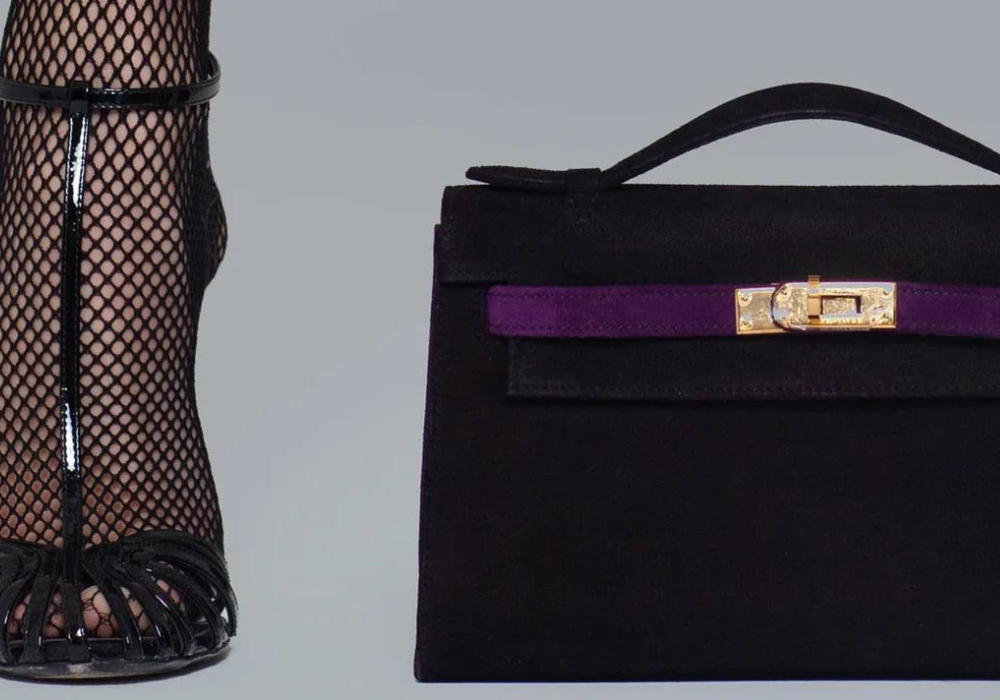
Slayed by Hermès Suede

Hermès Suede: Doblis, Grizzly, and Veau Velours — A Collector's Reference

The JaneFinds Archive Hermès Suede Doblis, Grizzly, and Veau Velours — a collector's reference Hermès works with suede deliberately — not as a default material, ...

Read more
Hermès Bag Collecting Guide | How to Build Your Collection

How Collectors Build Hermès Collections: Strategy, Vision & Icons

A JaneFinds master guide to building a Hermès collection — philosophies, acquisition strategy, rarity lenses, care, and display, illustrated with signature Birkin, Kelly and Constance imagery.

Read more
JANEFINDS STAFF
5 min read

Collectible Hermès Bags: The Basics

ow the secondary market for Hermès Birkins, Kellys, and Constances actually works — scarcity, auction pricing, value factors, and what makes a bag genuinely collectible versus simply expensive.

Collectible Hermès Bags: The Basics
The JaneFinds Archive

Collectible Hermès Bags: The Basics

How the secondary market actually works — and what separates a genuinely collectible bag from one that is simply expensive

Many bags can be called collectible in many ways — antique beaded purses, bejeweled minaudières, limited edition collaborations across any number of luxury houses. But the bags considered most collectible in any rigorous sense, the ones subject to intense scrutiny, sustained speculation, and a secondary market where prices consistently exceed retail, are the Hermès Birkin, Kelly, and Constance, and the variations of these models Hermès has produced over the past century.

A secondary market for these styles where prices surpass retail has existed for over twenty years. Understanding how that market works — how prices are set, what drives value, and how to collect in any meaningful way — requires understanding the forces behind it.

Hermès Kelly Un Point Sur Deux 28 Sellier Black Monsieur leather construction detail
Kelly 28 Sellier — Black Monsieur, Un Point Sur Deux stitching. The single-stitch construction visible here is among the rarest technical configurations in Kelly production — a detail invisible at distance but immediately legible to anyone who knows what they're looking at. This is the level of specificity that the collectible Hermès market operates on.

Why these three bags

Scarcity drives this market, and Hermès produces scarcity structurally rather than artificially. Each bag is made by hand, by one artisan from start to finish, in France. The dedication required to develop that skill to Hermès' standard is not in high supply. Neither are hides that meet their quality threshold — the rejection rate for leather at the tannery level is significant, and Hermès controls several of its tanneries outright to enforce that standard at the source.

As a family-owned company, Hermès has maintained these limiting qualities as brand heritage for nearly two centuries and has resisted every form of compromise on quality that would accelerate production. The result is a secondary market that has existed for over twenty years and that shows no structural signs of contraction.

Publicly, Hermès does not endorse the secondary market for its products. It is reasonable to speculate, however, that the house sees its benefit — a robust secondary market where bags sell for multiples of retail justifies prices at boutique that might otherwise seem difficult to defend. Though Hermès would argue its prices are justified by the quality of its products alone. And one could make the counter-argument that they're not high enough, given what people will pay above retail to acquire them.

Hermès Birkin 30 Gold Togo Gold Hardware
Birkin 30 — Gold Togo, Gold Hardware. The most liquid single configuration in the secondary market. This is what the baseline looks like.
Hermès Kelly 20 Mini II Sellier Black Epsom Palladium
Mini Kelly 20 II Sellier — Black Epsom, Palladium Hardware. The most allocated bag in current Hermès production, with secondary market premiums consistently above 140% of retail.
Hermès Constance 18 Soufré Yellow Epsom Palladium Hardware
Constance 18 — Soufré Yellow Epsom, Palladium Hardware. The Constance is the third pillar of the collectible Hermès triad — the H-clasp silhouette that has been in continuous production since 1969.

Not all Hermès bags, and not all Birkins

It is worth being specific: not all Hermès bags are collectible in this sense, and not all Birkins, Kellys, and Constances are equal. Even among the blue-chip models, demand and value vary considerably depending on material, size, and color — with hardware as a secondary factor. Within each of these categories the variations are extensive, which is what makes the Birkin, Kelly, and Constance endlessly collectable in theory. The number of unique possible configurations across all three models is large enough that no collection could be considered complete in any absolute sense.

This is why it is more useful to collect within defined parameters than to simply accumulate. Understanding how to collect requires understanding what is possible — and what within that field of possibility is actually rare, actually desirable, and actually capable of sustaining value over time.

How the secondary market sets prices

The value of a Hermès bag on the secondary market is largely determined by past auction results for similar configurations. Major auction houses have sold thousands of Birkins, Kellys, and Constances annually for over a decade across sales in New York, Hong Kong, Paris, and Geneva. Those results provide the clearest available picture of what any particular configuration is worth and how that has changed over time.

The pricing logic works as follows: newly released colors and special editions become available through the secondary market — through dealers and private sales — before any examples have crossed an auction block. During this initial period, pricing depends partly on retail and partly on anticipated rarity based on what dealers have seen and heard. Once multiple examples of a configuration have sold at auction, dealer pricing will typically track a high average of those results.

This is meaningfully different from how mature collectible markets price objects. In the jewelry market, for example, stones and metals have publicly known and independently calculable values — a diamond's worth can be estimated from its specifications alone. Hermès bags have no equivalent. Rarity is inferred from auction frequency, social media visibility, and the observation of secondary market dealers over time rather than from any published production data. Hermès does not publicly disclose production quantities for any configuration, color, or edition.

Speculation can be made from trends in auction results, but auctions are unpredictable by nature. An exceptional result from a motivated bidder can establish a false ceiling; a weak sale in a thin room can suppress perceived value for configurations that remain genuinely rare. The Hermès secondary market is more data-rich than it was a decade ago, but it has not reached the pricing maturity of fine jewelry or fine art, where comparable-sales analysis is more systematic.

What this means for the collector: The secondary market rewards buyers who understand configuration-level rarity better than the average participant. A collector who knows that a particular color was produced for only two seasons, or that a specific exotic skin configuration rarely survives in pristine condition, holds a genuine information advantage. JaneFinds has been operating in this market for 30 years — that institutional knowledge of what is genuinely rare versus what appears rare is the most meaningful thing we bring to any acquisition.
Work with JaneFinds →