







The Sold Archive
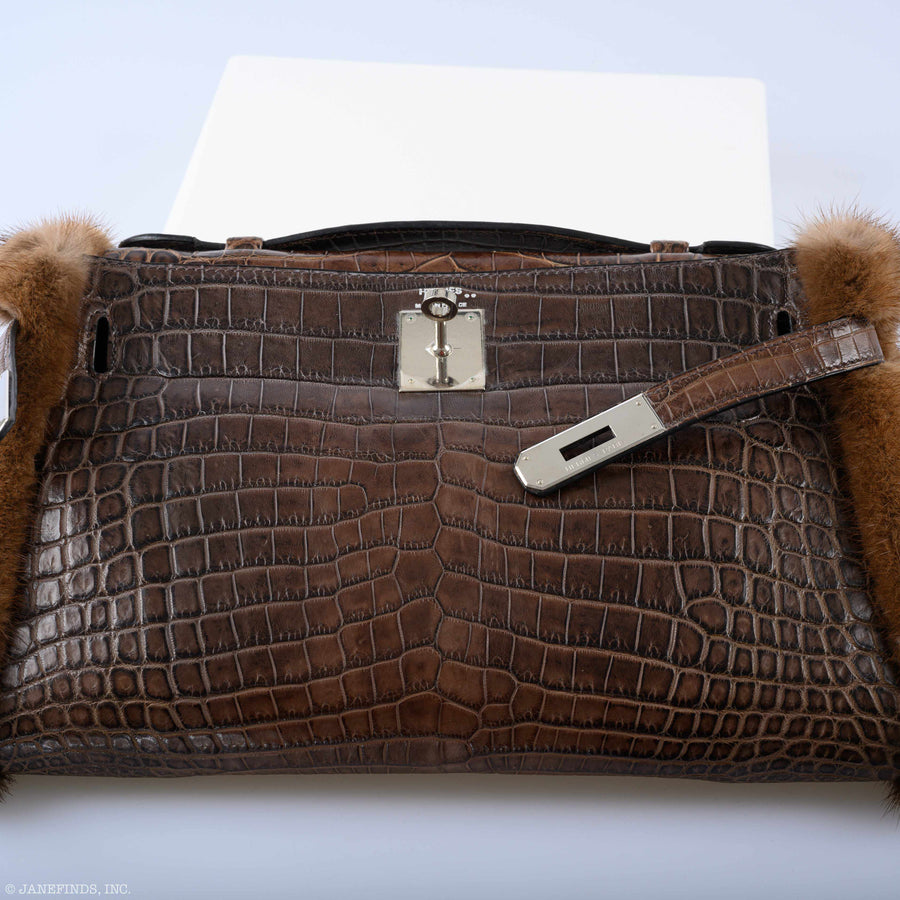
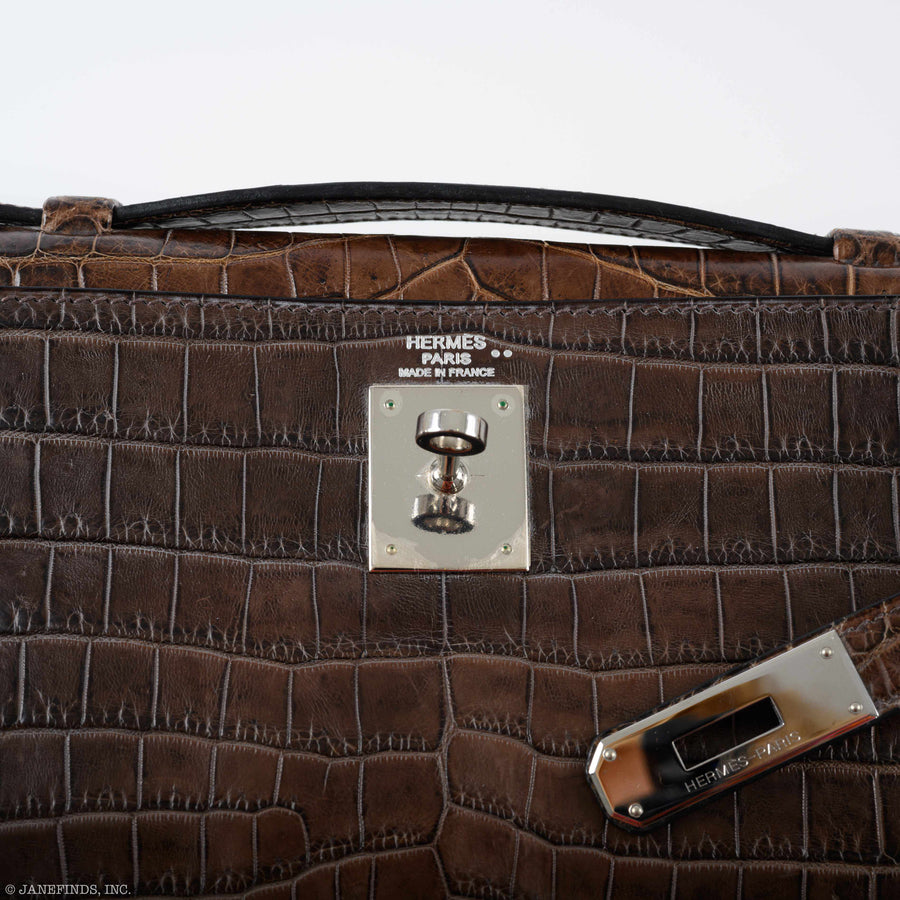
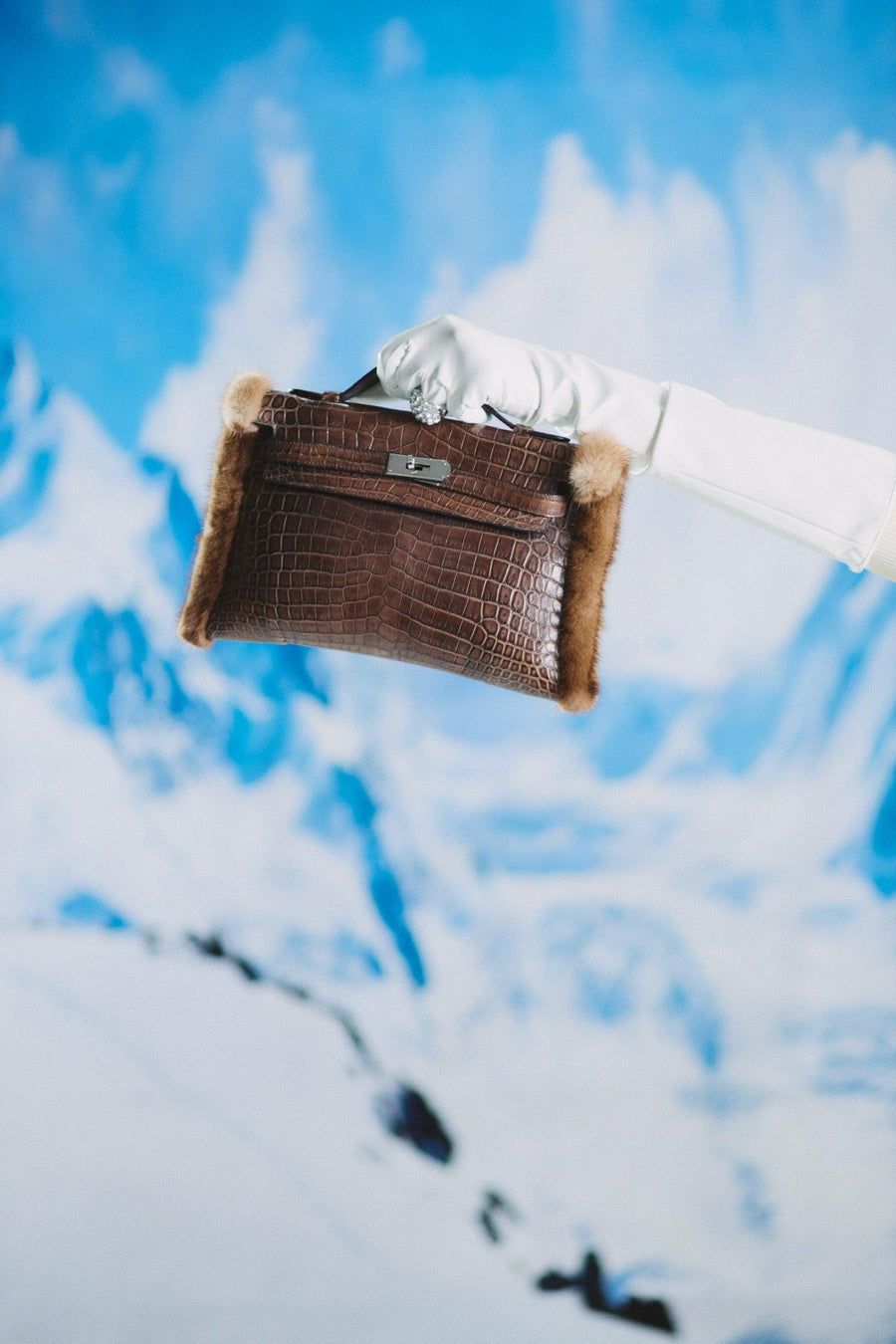
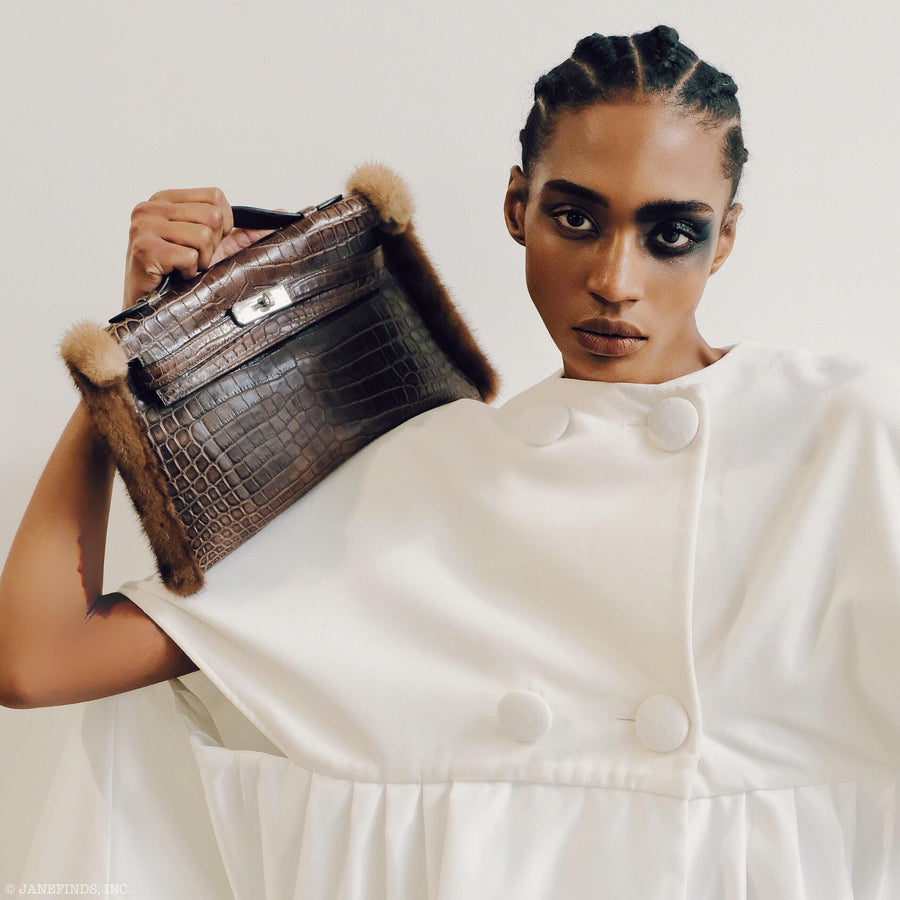
Hermès Kelly Muff Matte Havane Nilo Crocodile & Mink Palladium Hardware
Placed
- Realized
- $100,000–150,000
This piece has been placed. Jane can search privately for the same configuration.
Available now Hermès Kelly BagsThe object record
- Condition
- 1 – Pristine
- Material
- Matte Crocodile, Mink Fur
- Color
- Havane
- Metallic finish
- Palladium
The story behind the Kelly
Created in the 1930s by Robert Dumas as a women's bag with straps: a trapezoid with two triangular gussets, a cutout flap, a handle and two side straps. It took the Kelly name in 1956, when Grace Kelly made it famous. Sellier construction keeps the seams on the outside for a more defined outline; Retourné construction turns them inside for softer edges. The leather does not decide the construction: Box calf Kellys are recorded in both.
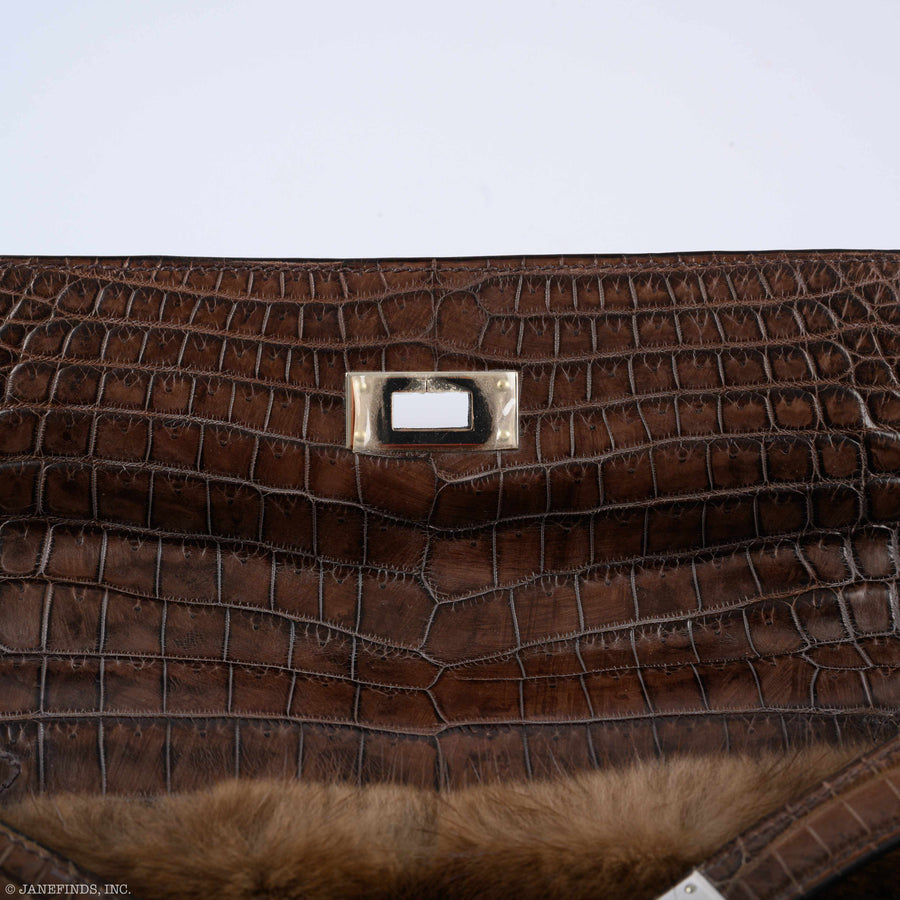
Discover Hermès Kelly BagsKelly Manchon (muff) in Matte Havane Crocodile with mink fur trim and Palladium hardware. Not a bag. A hand warmer in the Kelly silhouette, produced for the FW 2007/08 runway during Jean-Paul Gaultier's tenure. The exterior is matte crocodile in Havane, constructed in the Kelly's trapezoidal shape with tournante closure and sangles on the flap. Mink fur lines the interior and trims the edges. You slide your hands in from each end. No handle, no strap, no interior pockets. This is a display-grade collector object that also functions as the most extravagant hand warmer ever produced.
Collector's Insight:
The Kelly Manchon was a runway piece produced in extremely limited numbers. It applies the full Kelly hardware vocabulary (tournante, sangles, Palladium fittings) to a non-bag format, and matte crocodile with mink is a material combination that only appeared in Gaultier-era special production.
Resale Insight:
Kelly Manchons trade in the Hermès museum-object category alongside Kelly Dolls, So Black editions, and other pieces where the design concept drives the value rather than carrying function. Production numbers were in single digits. Examples surface on the secondary market rarely, and pricing reflects the object's status as a Gaultier-era runway artifact rather than a functional accessory.